
5-Minute Daily Habits to Keep Your Walk-In Closet Organized
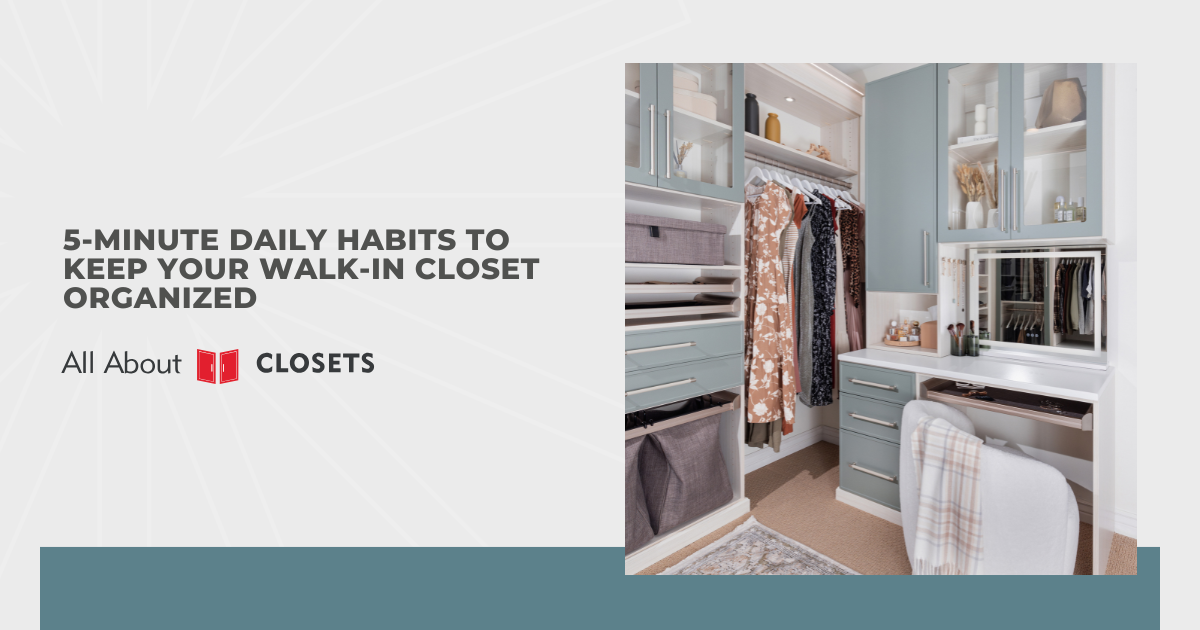
Clutter rarely builds up overnight. It creeps in one dropped sweater, one unreturned belt, one skipped tidy-up at a time, until a space that once felt spacious starts closing in on you. I've watched plenty of closets slide into chaos not because anyone lacked the will to stay organized, but because daily upkeep got pushed aside for "someday." A few short walk-in closet habits practiced consistently can prevent that slow slide entirely.
You don't need a weekend overhaul or an expensive system to keep things in check. Give your space five minutes a day and you'll spend far less time and energy than you would on one exhausting deep-clean every few months. What matters isn't how much effort you put in at once, but how often you show up for the small stuff, since a closet you touch daily rarely reaches the point of overwhelm.
Building better habits starts with knowing which ones actually move the needle for a walk-in closet. Below are seven quick daily practices worth adding to your routine:
- Reset your floor space
- Return items to their spot
- Apply the one-in, one-out rule
- Straighten hangers and clothes
- Sort tomorrow's outfit
- Clear surface clutter
- Scan for donation candidates
Each one takes only a few minutes, but together they'll keep your space feeling calm and functional year-round.
Reset Your Floor Space
Your closet floor takes the brunt of a busy morning. Shoes end up scattered near the door, a hamper overflows in the corner, and stray hangers slip underfoot before you've even left the house. Ignore it for a few days and a five-minute problem turns into a Saturday-afternoon project. Five minutes each evening, right before you close the door for the night, keeps that mess from ever taking hold.
Clutter on your floor makes the whole closet look messier than it actually is, even when the shelves above stay perfectly tidy. A pile of shoes or a fallen hamper also blocks your view of what's stored on the floor itself, from bins to shoe racks you forgot you owned. Nightly sweeps keep those sightlines open and make a small walk-in closet feel noticeably bigger.
Pair this habit with putting laundry directly in the hamper instead of setting it on the floor first, since that single change eliminates most of what ends up scattered. Right before bed works well for most schedules, since it closes out the day and gives you a clean start tomorrow. Keep a small basket near the door for anything without an obvious home yet, like a scarf you're not sure where to hang. Keep it up and nothing lingers on the floor long enough to become a permanent fixture.
Return Items to Their Spot
Once your floor stays clear, the next habit worth building is returning things to their spot the moment you're done with them. Belts, scarves, jewelry, and jackets pile up on chairs or dressers instead of heading back to their designated place, and that stalled trip is usually where the real mess starts. Quick return trips, like hanging your robe back on its hook the second you take it off, keep the whole system from unraveling.
If you skip the return step even once, it gets easier to skip again tomorrow, and a single dresser chair can turn into a full-blown pile within a week. Small piles turn into bigger ones fast, and before long you're facing a chair covered in clothes instead of a closet that works for you. Give frequently used items a specific hook, shelf, or bin, like a designated peg for your robe or a tray for jewelry, and you'll remove any guesswork about where things belong. Everything you own deserves an obvious home, since putting it back should take seconds, not minutes.
Aim for consistency over perfection with this habit. A missed day here and there won't derail your system, but a full week of skipped returns usually means a weekend spent re-sorting everything. Even loose consistency keeps your walk-in closet functioning the way you designed it to.
Apply the One-In, One-Out Rule
Item returns keep your walk-in closet functional day to day, but that alone won't stop the slow creep of too many clothes for the space you have. Your closet overflows quietly when new clothes come in without anything going back out. A sweater arrives, nothing leaves, and within a few months your rod is packed tighter than it was designed to hold. One-in, one-out keeps the creep from happening by tying every new purchase to an old item leaving the closet.
Pick one item to donate, sell, or toss before you even take the tags off something new, whether that means an old t-shirt with a stretched-out collar or jeans you haven't worn since before a move. I like recommending it to anyone who feels like their closet fills up faster than they can keep up with, since it forces a decision at the exact moment clutter would otherwise start piling up. Even if you don't follow it perfectly every week, it still cuts down on excess over time.
Donation bins, consignment shops, and online resale platforms all make the removal side of this rule painless. Set a small basket inside your closet specifically for outgoing items, so you're not scrambling to decide where things go later. Fill it steadily throughout the week instead of waiting for one big purge, adding a single item each time you notice something you no longer reach for. Laundry day often arrives with a bag already packed and ready to donate.
Straighten Hangers and Clothes
With fewer items crowding your walk-in closet, straightening what's left becomes a lot easier to keep up with. Hangers get pushed together, twisted backward, or left crowded onto one section of the rod throughout a normal week, and mixing wire, flocked, and wood hangers side by side makes that crowding worse since they don't stack or slide the same way. Even a couple of minutes spent facing hangers the same direction and swapping in a matching hanger type keeps your closet easier to navigate.
Clothes that touch too closely also wrinkle faster and take longer to press before wearing, especially lightweight fabrics like linen or rayon. Leave a little breathing room between each piece so fabric can hang properly instead of getting crushed. Similar items grouped together, like all your button-downs or all your dresses, make your closet function almost like a small store. Anything becomes easy to find instead of a five-minute dig through a jumbled rod.
Folded items deserve the same quick attention as anything on a hanger. Stacks lean and slide out of place fast, especially on shelves that get opened and closed several times a day, and stacking more than five or six sweaters together usually guarantees a collapse. Straightened stacks and refolded pieces keep shelves looking as tidy as your hanging rod.
Sort Tomorrow's Outfit
An organized rod makes the next habit almost effortless, since you can actually see your options instead of digging for them. Mornings move faster when you already know what you're putting on. A half-asleep dig through your walk-in closet leads to rushed decisions and clothes tossed aside in frustration. Tomorrow's outfit, picked out tonight even loosely, removes that scramble before it starts.
A quick check of the weather forecast, just five seconds, helps you avoid the classic mismatch of shorts on a cold morning or a wool sweater on a warm one. It also gives you a chance to spot a missing button or a stain that needs treating, instead of discovering it as you're about to walk out the door. Nothing feels worse than realizing your only clean option is still in the hamper five minutes before you need to leave.
A simple hook or valet stand right outside your closet makes this habit even easier to stick to. Hang the full outfit there the night before, from top to bottom, shoes included if you can manage it. Weekends work well for planning several days out at once, especially if you tend to hit snooze more than once on weekday mornings. Five minutes of setup turns a daily task into something that barely takes any thought at all.
Clear Surface Clutter
Shelves, dressers, and any flat surface inside your closet tend to attract loose items fast, especially once you start using that valet stand or hook from the last habit. Jewelry, receipts, spare change, and random accessories pile up in corners without you ever deciding to put them there. Daily attention to that surface clutter keeps small messes from turning into a permanent junk drawer effect.
A cluttered surface also makes it harder to use the storage you already have, since baskets and trays get buried under loose odds and ends within days. I always tell people that a designated tray or small dish, even something as simple as a shallow bowl, solves most of this problem instantly. Everything gets a landing spot instead of drifting toward whatever surface is closest. Extra seconds spent wiping the surface down while you're at it go a long way, especially in a walk-in closet where dust settles fast.
Small trays, catchalls, or a simple decorative dish work well for corralling loose items without adding visual clutter. Keep one within reach of the door so emptying your pockets becomes automatic on the way in, right alongside the habit of hanging up your outfit. Most trays by the door get used within the first week, once they become part of your regular routine.
Scan for Donation Candidates
With surfaces clear and your routine in place, the last habit worth building is a quick daily scan for items that no longer belong. Plenty of items in your walk-in closet stop earning their spot long before you notice, even ones that once felt essential, like a jacket from a job you don't have anymore. Sizes change, styles shift, and some pieces simply stop getting worn without any clear moment marking the change. Scan for anything that fits that description each day and you'll keep donation piles small and manageable instead of facing an overwhelming bag at the end of the season.
Look for pieces that no longer fit, that you haven't worn in over a year, or that you keep out of guilt rather than genuine use, like a gift you never quite liked. Keep a basket near the door to temporarily hold these candidates before you make a final decision. Give yourself permission to let something go the moment you notice it's not earning its place anymore.
Donation drop-offs, consignment appointments, or a simple curbside pickup make the final step painless once you've built up a small pile. Schedule that step regularly, maybe on the same day you take out the recycling, instead of letting bags sit in your closet for months. A bag waiting by the door for weeks defeats the entire purpose of scanning daily in the first place. Regular removal keeps the habit working the way it's supposed to.
Conclusion
Five minutes tonight buys you a calmer morning tomorrow, and that trade only gets better the longer you keep it up. Touch your walk-in closet daily and you'll never lose a Saturday to a project that got out of hand. Skip a day and you won't lose ground, but string enough of these habits together and your mornings start feeling less rushed while your evenings feel less chaotic. Keep this up for a month and your closet will start running itself instead of running you.

George obtained a Master of Science Engineering Degree from New Jersey Institute of Technology. After graduation, he worked at AT&T Bell Labs and Lucent Technologies after the company split. With an extensive background in construction management and ergonomic space design, spanning residential and commercial, designing and installing closets in New Jersey is second nature for him.